Put the decision in their hands.

Seven live scenarios for MBA, PGDM, executive education and L&D. Each begins with a decision learners must defend.

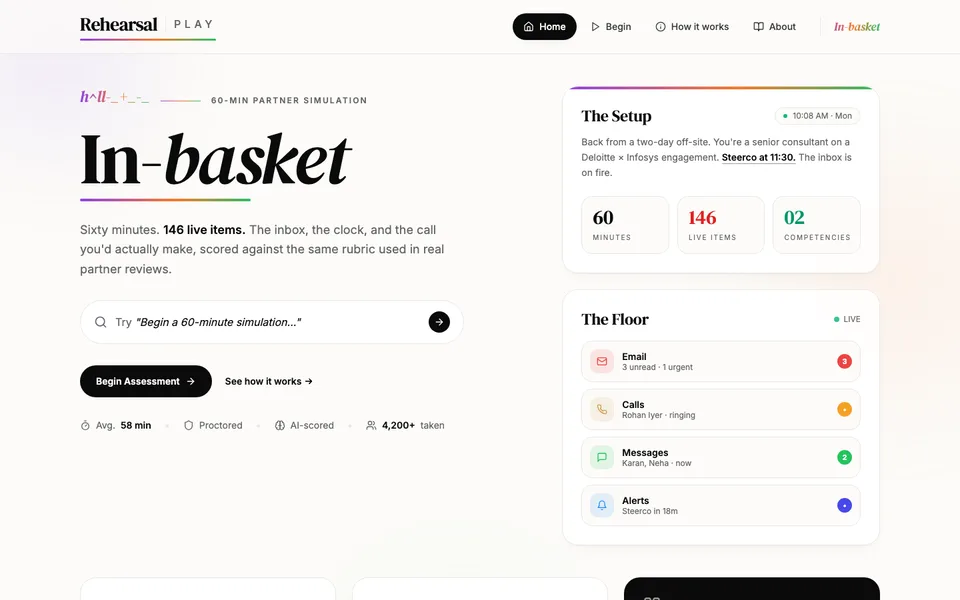
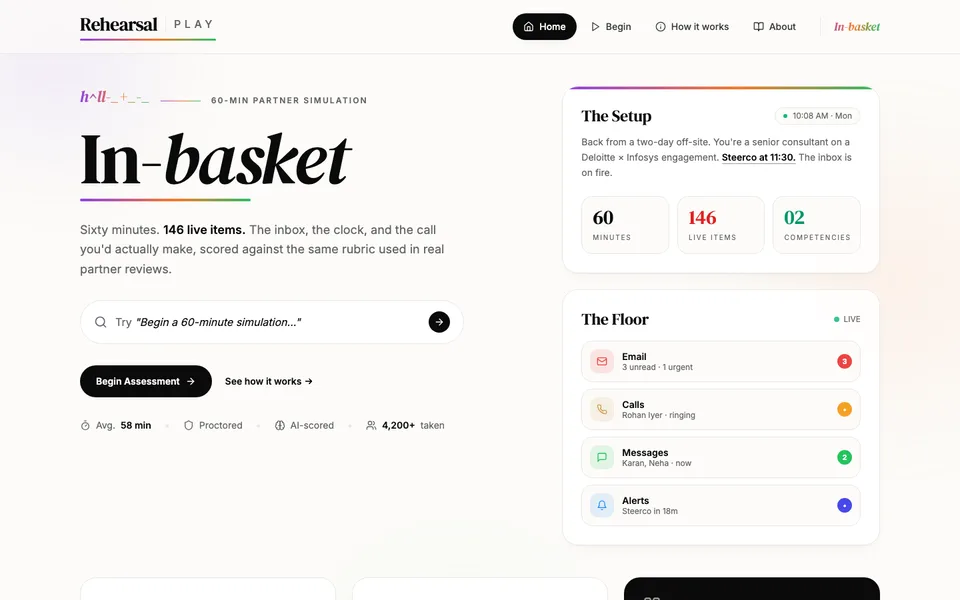
In-Basket simulation live product screen
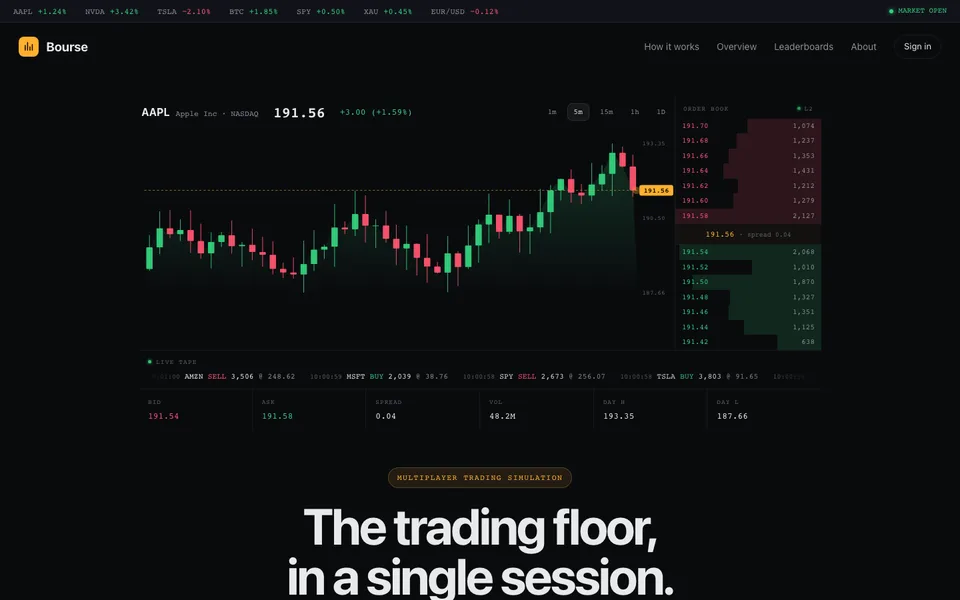
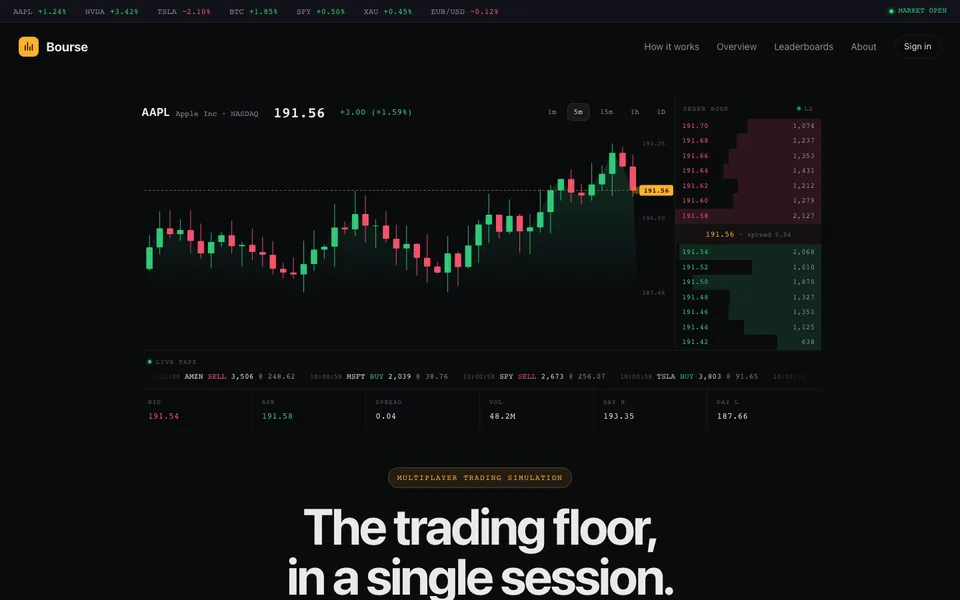
Bourse live trading simulation screen
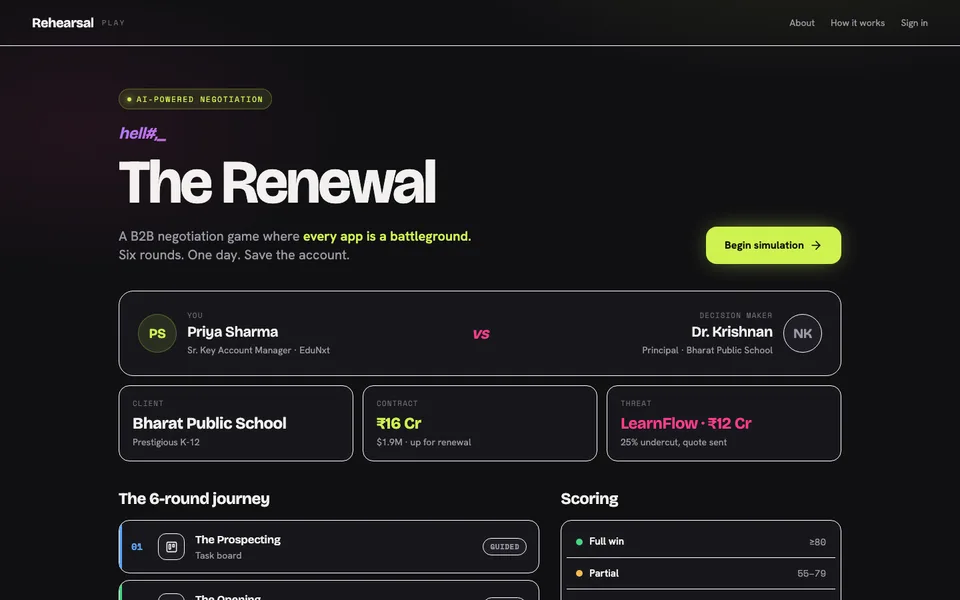
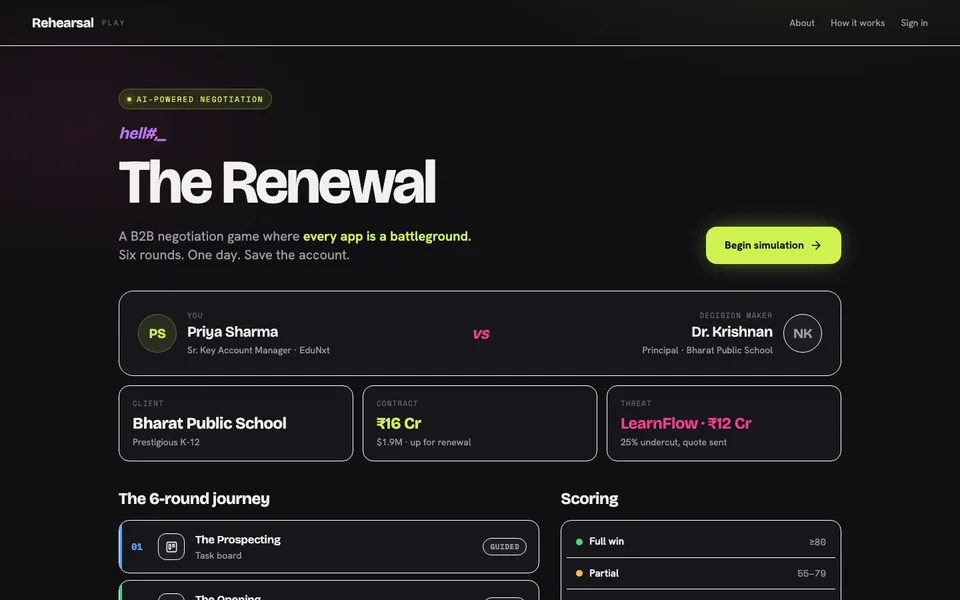
The Renewal B2B negotiation simulation screen

What should the room practise today?

Each card opens the live product. Timing, access and assessment are stated before you leave this page.

What is a Rehearsal business simulation?

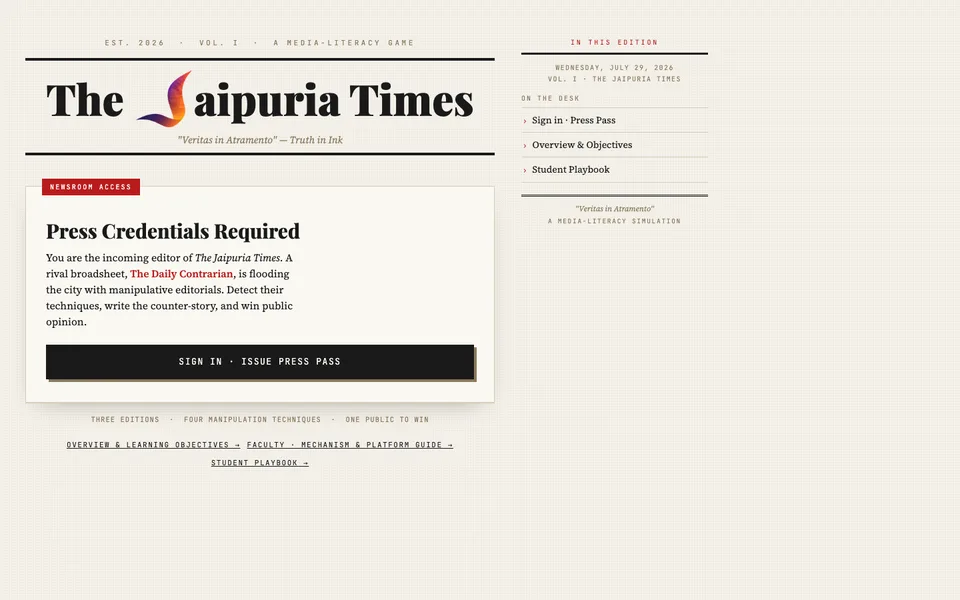
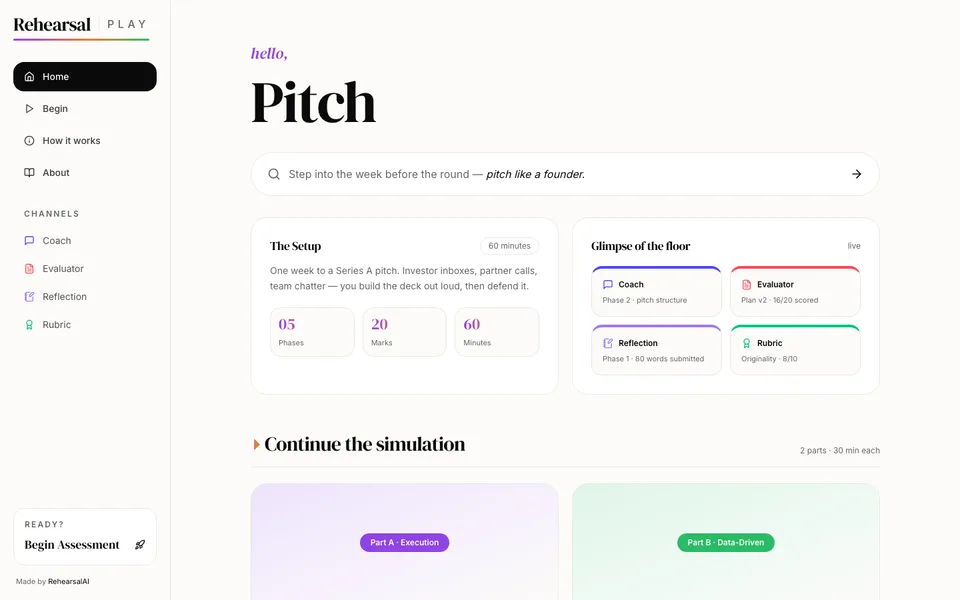
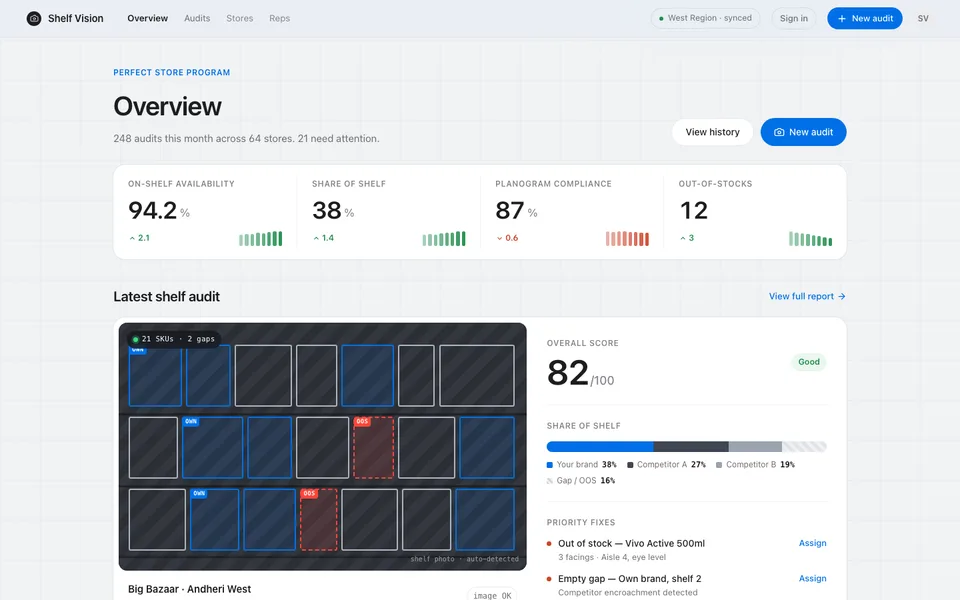
A Rehearsal business simulation is a browser-based decision environment for MBA, PGDM and executive classrooms. It places a learner inside a recognisable work situation: triaging a partner's inbox, defending a venture, reading a manipulated newspaper, managing a retail shelf, trading a portfolio or saving a ₹16 crore account.

Most are designed for one class, with session lengths from about 20 to 90 minutes. Faculty should choose Rehearsal for a focused managerial decision followed by a rapid debrief. Choose Cesim or Capsim when a course needs a broader, configurable, multi-round company simulation. Every title is built in-house at Rehearsal AI, led by Dr. Shiva Kakkar.

Compare teaching formats

A practical view of Rehearsal, Cesim, CapsimCore and Harvard Business Publishing.

Rehearsal is strongest when a class needs one vivid role decision and a fast debrief. Cesim and Capsim are stronger when a course needs configurable, multi-round company management.

Decision criterionRehearsalCesimCapsimCoreHarvard Business Publishing
Best fitFocused role decisions and rapid debriefsConfigurable, multi-round business ecosystemsCross-functional company and team simulationsCase-linked simulations across management topics
Delivery shapeMost scenarios: about 20-90 minutesVaries by product; often round-basedSingle session through full-term deliveryVaries by title; synchronous or asynchronous
AI roleScenario feedback in most titles; Quizzr uses speed and accuracyIntegrated assistant for instructors and coach for studentsIntegrated teaching assistant and configurable scoringVaries by simulation
Trial and entryPublic front doors; some experiences are gatedFree Cesim AI trial through a request formRegistration is part of classroom deliveryFree educator trials are available
ContextRole-level situations, including Indian currency and work settingsBroad international portfolioBroad business-acumen portfolioCase and course specific
Sources checked 29 July 2026:Cesim AI CapsimCore HBP educator trials

How these simulations are built.

Seven titles, one build standard: give a learner a role with real stakes, make them produce actual work inside it, then assess that work against a standard the syllabus already names.

01

Learners produce work, not answers.

In-Basket asks for a written justification behind each triage call. Propaganda Wars wants a finished counter-editorial. The Renewal is negotiated across six real business tools, from a Jira ticket to the closing Gmail. What gets assessed is the artefact the learner made, which is also what gives the debrief something concrete to open.

02

Rubrics point at frameworks you already teach.

Cialdini's seven principles score the negotiation out of 100. Shelf Vision reads planogram compliance and share-of-shelf, with training audits mapped to Kirkpatrick L1–L3. The venture pitch is pushed on TAM-SAM-SOM and positioning before it reaches the investor panel. That mapping is what lets a simulation drop into a session plan you have already written.

03

The shape of the room is part of the design.

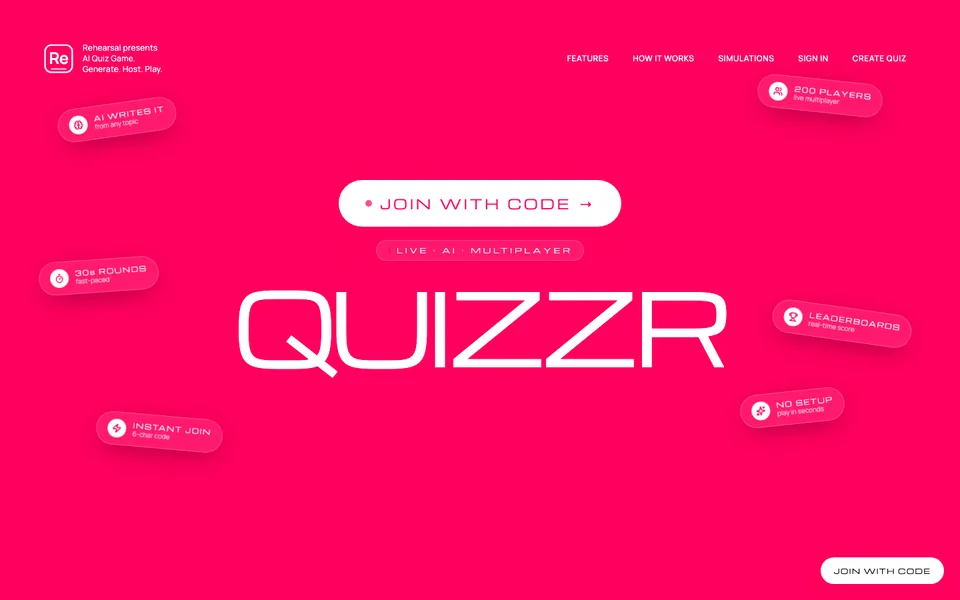
Some titles run individually, some as a live cohort joining by six-character code from any phone, and Bourse as trading desks of two to five. Faculty get dashboards, AI feedback and CSV exports of cohort results. Propaganda Wars counts the best of a learner's last three attempts, so a retry stays part of the learning.

Faculty questions

Which business simulation should I use for my MBA class?+

Choose by the decision you want learners to make. Use In-Basket for prioritisation and leadership, Bourse for markets and portfolio decisions, The Renewal for B2B negotiation, Shelf Vision for retail execution, Persuasive Business-Plan for entrepreneurship, Propaganda Wars for critical reading and business communication, and Quizzr for live retrieval practice.

Are all Rehearsal simulations AI-scored?+

No, and the distinction matters. Most scenario simulations use AI or a structured rubric to evaluate decisions and written reasoning. Quizzr ranks players through speed and accuracy. Bourse centres the debrief on portfolio performance and live P&L. Each card on this page states the assessment method before you open the product.

Do learners need to install an app or create an account?+

The simulations run in a web browser, so there is no software installation. Entry varies: several begin from a public front door, Bourse uses sign-in for a live desk, Quizzr uses a host or join code, and Propaganda Wars requires a press pass or facilitator access.

Is Rehearsal a Cesim alternative?+

Rehearsal is a useful Cesim alternative when a faculty member wants a short, focused role simulation that can lead quickly into discussion. Cesim is the stronger fit when the learning goal requires a configurable, multi-round business ecosystem, cross-functional team decisions, and an integrated AI assistant across the simulation cycle.

Can I inspect a simulation before planning the class?+

Yes. Every card opens the live product front door in a new tab. You can inspect the scenario, timing, entry route and assessment style before deciding whether it fits your session. Where access is gated, the card says so explicitly.

Plan a class around a real decision.

Tell us about the room, the learning goal and the time available. We will suggest the simulation that fits.

Prefer email? support@gradeless.ai

We will only use these details to reply to your enquiry.